
No One Tells You How Many Decisions a Website Actually Takes

Davor Altman
Founder, Steelbridge GTM · July 25, 2026 · 5 min read
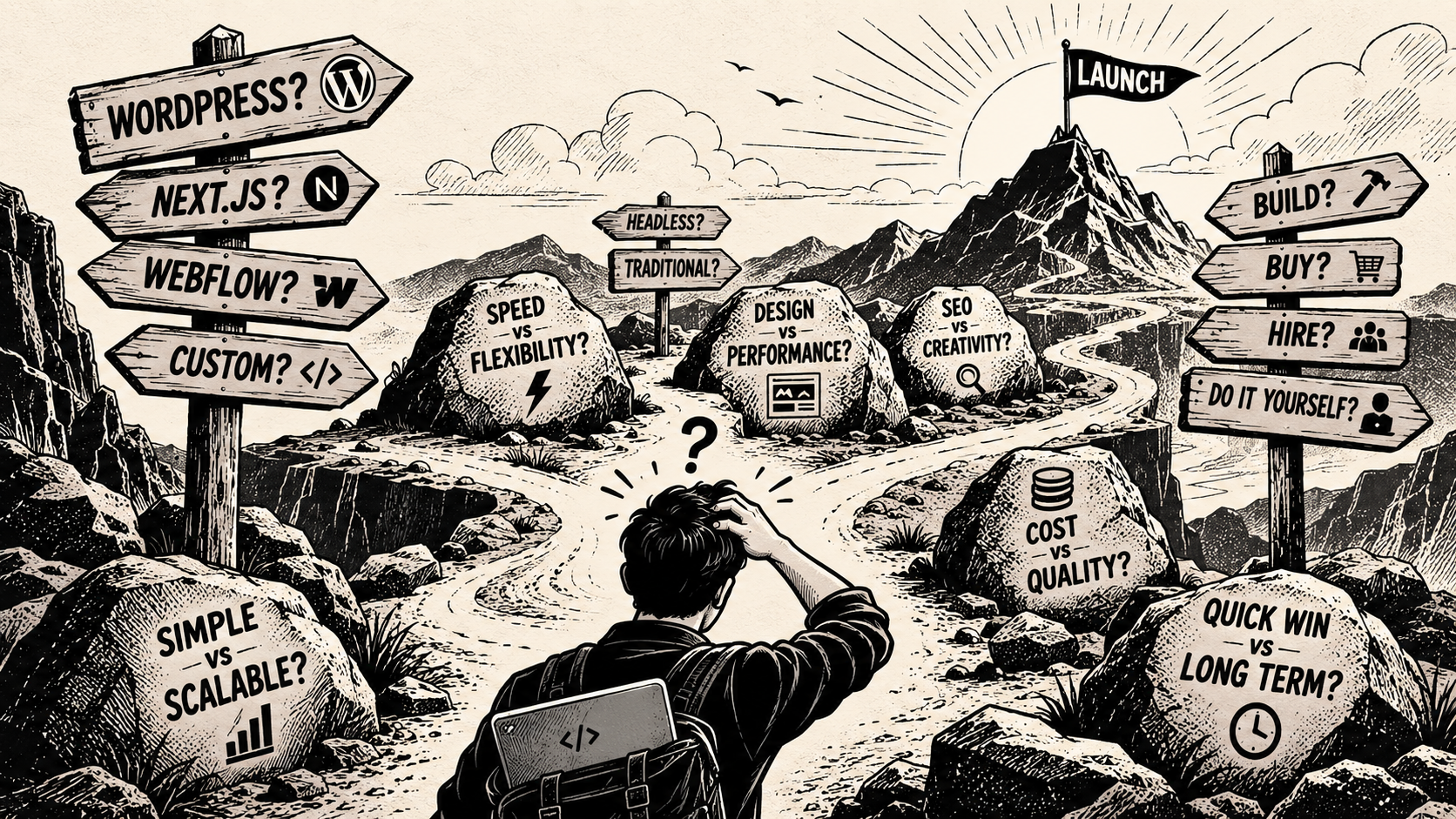
Most people don't realize how many decisions stand between we need a website and an actual live one - and that's before a single word of real copy gets written. The first fork is actually three-way: a traditional CMS, an AI-built site, or hand-coding it yourself with a framework.
CMS is still the default answer for a lot of teams. WordPress and Drupal are mature, plugin-heavy, self-hosted platforms - which means the CMS choice comes bundled with a second decision: where does it actually live? Shared hosts like GoDaddy and SiteGround are still the default for a lot of small sites because they're cheap and offer one-click WordPress installs, though managed WordPress hosts like WP Engine or Kinsta trade a higher price for a lot less maintenance headache. Webflow, on the other hand, hosts itself - no separate hosting decision needed, at the cost of being locked into their platform. Or are you going to go headless instead - decoupling the CMS from the front end entirely, like using WordPress purely as a content backend paired with a framework such as Gatsby for the actual rendering? It's more setup than a standard install, but it buys you CMS-level content editing without being stuck with WordPress's own front end. Then there's Cloudflare's EmDash, launched earlier this year as an open-source spiritual successor to WordPress - built on Astro, running on Cloudflare Workers, with plugins sandboxed instead of having full run of your site the way a WordPress plugin does. No plugin ecosystem yet, no community to speak of, but the architecture is the right idea, and it's one to watch.
The second path is AI-native, and it splits into two flavors. All-in-one platforms - Lovable, Bolt.new, v0, Replit - take a prompt and hand back a working site that's already hosted, no separate deploy step required. Claude Code and ChatGPT work differently: they'll write and iterate on a full website with you, but what comes back runs on your own machine - you still have to host it yourself afterward, same as with a framework you wrote by hand. Either way, it's the fastest route from zero to something clickable, and for a lot of small businesses and side projects, that speed is the whole point. But the all-in-one platforms come with their own tradeoffs, worth thinking through before a business commits to one. What happens the day a platform like Lovable decides your country isn't worth supporting anymore, and your entire site lives inside their black box, on their infrastructure, in a format you can't easily take with you? That's not a hypothetical I'd want to find out the hard way. It's exactly why I lean toward tools that generate code you actually own - code you can read, move, and rebuild elsewhere if you ever need to - rather than a platform you're effectively renting a website from.
The third path is skipping platforms altogether and coding it yourself with a framework: Next.js, Vite, SvelteKit, or the aforementioned EmDash if you want something closer to a traditional CMS but modern under the hood. Each one comes with its own opinions about routing, rendering, and how much boilerplate you're willing to tolerate - and honestly, for most projects, any of them will get the job done. I built this site on Next.js, with Claude Code doing the heavy lifting on implementation, hosted on Netlify. Other solid options for hosting a modern framework site are Vercel and Cloudflare Pages - the differences mostly come down to pricing, build limits, and how deep you already are in one ecosystem versus another.
Who actually builds it is its own separate decision, and it doesn't get talked about enough. Build it yourself, and you own every choice above - which also means you're on the hook for every bug, every framework upgrade, every why is this suddenly broken moment on a Sunday night. Hire someone, and you buy back your time and your sanity, but only if you pick the right someone - a bad agency or freelancer can burn more time than doing it yourself would have.
And the time it actually takes? That's the question people ask most, and the honest answer is: it depends. Over the years we've run website projects that wrapped in two weeks, and others that stretched to six months. The gap isn't just the tech stack and the complexity. It's how fast real content shows up, how many stakeholders need to sign off, and how many wait, can we also add... moments happen along the way. If there's one thing years of building and maintaining websites has taught me, it's that a website is never actually finished. It's a living thing you keep feeding - new pages, new copy, broken links, security patches, a redesign every couple of years - not a project you check off a list once and walk away from.
Then there's the content itself, and it's its own decision tree that most teams never actually sit down and decide on. Are you writing every word yourself, prompting an AI to draft and editing the output, or hiring a copywriter who actually knows the space? Optimizing for search rankings, or writing purely for the humans who land on the page? Fully creative and voice-driven, or templated and safe? I've watched teams default to whichever option is fastest that week rather than deciding on purpose, and it shows - the content ends up feeling stitched together instead of like one coherent voice. Whatever you land on, that's the choice that actually determines whether people stick around once the site is deployed and out there on the web.
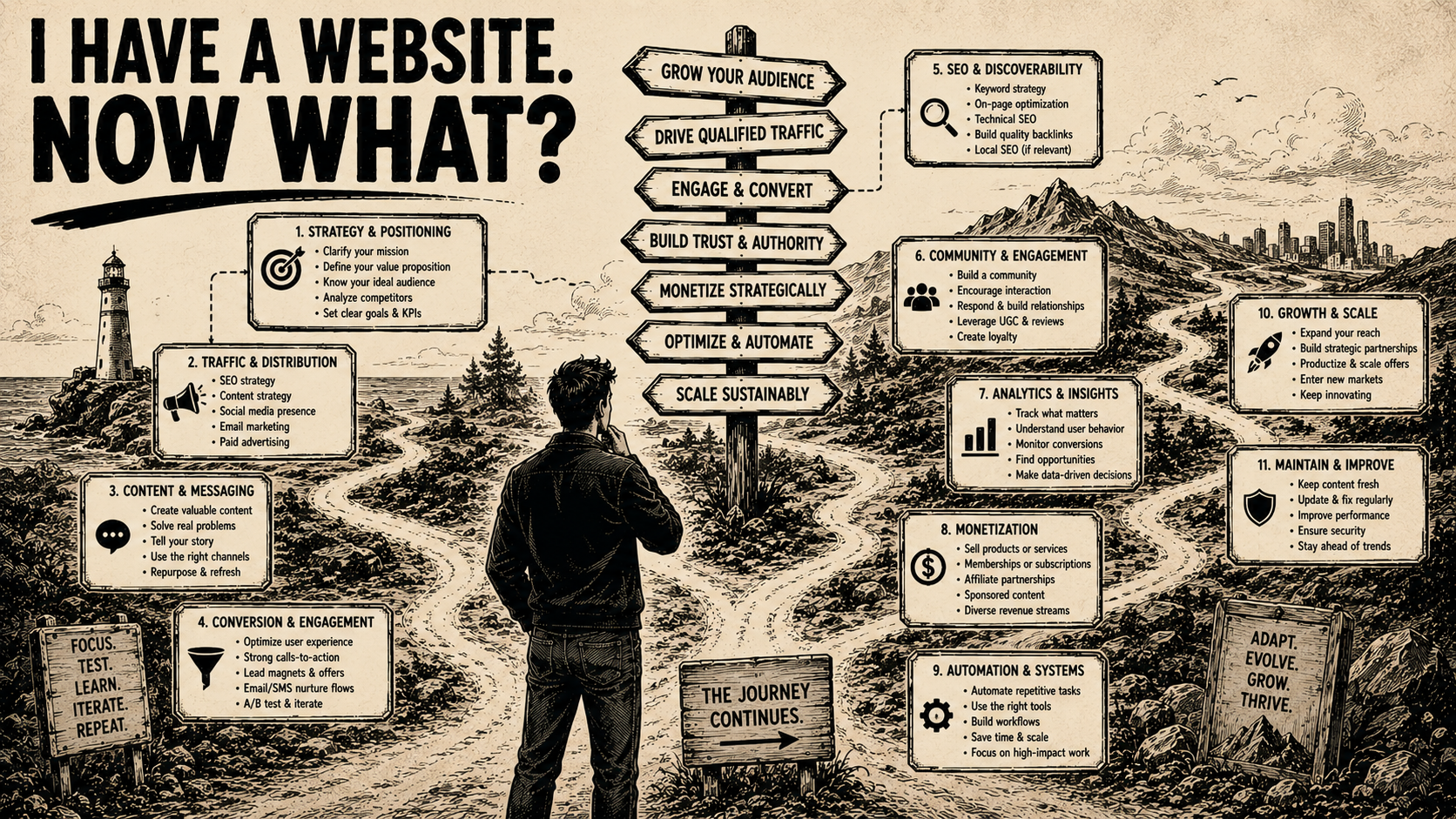
You've made it through the build. Now what? That's going to be the next article we'll cover 🙇

Ready to Build Your GTM?
Whether you're launching from scratch or fixing what's broken, we'll help you get to revenue faster.