
Website Launched. What Is Next?

Davor Altman
Founder, Steelbridge GTM · July 26, 2026 · Updated August 10, 2026 · 7 min read
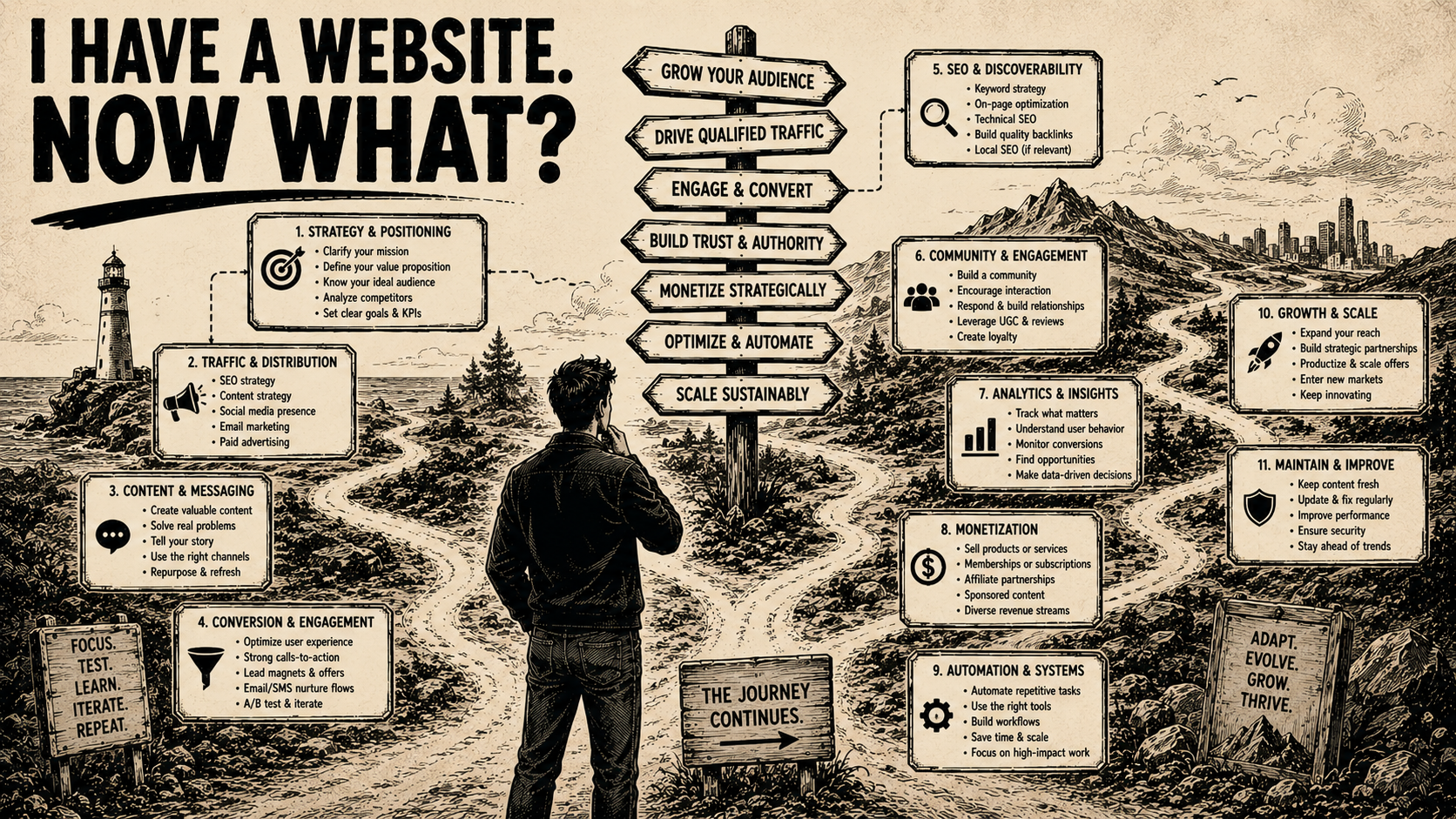
In the previous article I wrote about everything that goes into building a website - CMS or AI-built or hand-coded, who builds it, how long it takes. Say you've made all those calls and the site is live. Congratulations, you're maybe a third of the way done 🤷 A website with no visitors is a very expensive PDF, and getting from live to working is a longer list than most people expect: know what you're building before you build it, get the content right, get found, get people to actually do something, keep them around, make it pay for itself, stop doing everything by hand, and then do it all again at a bigger scale - on repeat, for as long as the site exists.
Know What You're Building Before You Build It
Start before the site even has traffic, with strategy and positioning, because it's the step people skip and then wonder why nothing else works. What's the actual mission, not the mission-statement version of it? What's the value proposition, stated in one sentence a stranger would understand? Who is the audience, specifically, not everyone who might need this? What are competitors doing that you're deliberately doing in a different way, and what does success even look like in numbers - traffic, signups, revenue, whatever the real KPI is? Skip this and every tactic downstream - SEO, ads, content - ends up optimizing for the wrong audience, because nobody defined the right one.
Get the Content Right
Content and messaging is the next layer, and it's not the same job as writing a few landing pages before launch. It's an ongoing habit: creating content that actually solves a real problem instead of restating the product page in different words, telling the story of the business instead of a generic pitch, publishing through the channels your audience actually uses rather than the ones that are easiest for you, and repurposing what already exists instead of starting from zero every time - a good article becomes a LinkedIn post, an email, a few slides, a video script. Most teams have far more usable content sitting around than they realize; the failure is distribution, not raw material.
Get Found
Then comes traffic and distribution, which is where most people's expectations and reality part ways - a URL existing does not mean Google knows or cares. Google Search Console is step one: submit a sitemap, see what's actually indexed, find out which pages Google thinks are relevant for which searches, because it's rarely the ones you'd guess. From there, discoverability splits into the slow way and the fast way. The slow way is organic - a real keyword strategy, on-page and technical SEO (page speed, clean URLs, structured data, mobile rendering), backlinks from other sites that consider you worth citing, and local SEO if a physical location or region actually matters to the business. Tools like Ahrefs or Semrush show you where you stand against competitors and where the gaps are. The fast way is paid: Google Ads, LinkedIn, whatever channel your buyers actually spend time on, plus email marketing and an active social presence to keep pulling people back. Paid gets you traffic on day one but stops the moment you stop paying for it; most real strategies are some blend of both, weighted by how patient the business can afford to be.
Get People to Actually Do Something
Getting someone to the site is worthless if nothing happens once they're there. This is where a website stops being a web project and turns into a GTM one: an optimized user experience, strong calls-to-action instead of a homepage that leaves visitors guessing what to do next, lead magnets and offers worth trading an email address for, nurture flows over email and SMS that keep following up after the first visit, and continuous A/B testing instead of assuming the first version was the right one. Forms should route straight into wherever sales actually works - HubSpot, Salesforce, or even just a Slack channel for a small team - and the follow-up needs to happen in minutes, not days. I've seen more deals lost to a lead sitting untouched in an inbox for a week than to anything actually wrong with the website itself.
Keep Them Around
Conversion gets someone to raise their hand once; community is what makes them stick around. That means actually building one - encouraging interaction instead of broadcasting at people, responding and building real relationships instead of leaving comments and DMs on read, leaning on user-generated content and reviews on places like G2 or Trustpilot, and giving repeat visitors and customers a reason to feel like insiders rather than one more name in the CRM. A Discord or Slack community isn't right for every business, but the underlying habit - treating an audience as people to build a relationship with instead of a funnel to push through - almost always is.
Know What's Actually Working
None of this means anything if you can't tell whether it's working, which is why analytics and insights sit underneath all of it. Google Analytics is still the default, though privacy-first alternatives like Plausible and Fathom have picked up ground for teams that want something lighter and cookie-consent-free. The tool matters less than deciding, before launch, what you're actually trying to track - because traffic by itself tells you almost nothing. Understand user behavior, monitor the conversions that actually matter, and look for the opportunities the data is quietly pointing at, so decisions are made from evidence instead of a hunch about what's probably working.
Make It Pay for Itself
If the site exists for a business, at some point it has to make money, and monetization is rarely just one thing. Selling products or services directly is the obvious path, but plenty of sites layer in memberships or subscriptions through something like Substack or Patreon, affiliate partnerships, sponsored content, or some mix of all of it. Diverse revenue streams aren't just about upside - they're insurance against any single channel drying up.
Stop Doing Everything by Hand
By this point there's a lot to keep running, which is exactly why automation and systems matter. Repetitive tasks - lead routing, follow-up emails, reporting, content scheduling - should be automated with tools like Zapier, Make, or n8n, not redone by hand every week. Build the workflow once, let it save time going forward, and put the time back into the handful of things that actually move the needle instead of the busywork that doesn't.
Do It Again, at a Bigger Scale
Eventually the goal shifts from keep it running to growth and scale - expanding reach, building strategic partnerships, productizing what's been working into something repeatable, and testing new markets instead of only optimizing the one you started in. And underneath all of that, permanently, is maintenance: keeping content fresh, fixing what breaks, watching performance, patching security, staying ahead of whatever changes next. Dependencies go stale, frameworks push breaking upgrades, a certificate or DNS record quietly expires while nobody's watching - none of it is hard work, but it has to happen on a schedule instead of only when something visibly breaks.
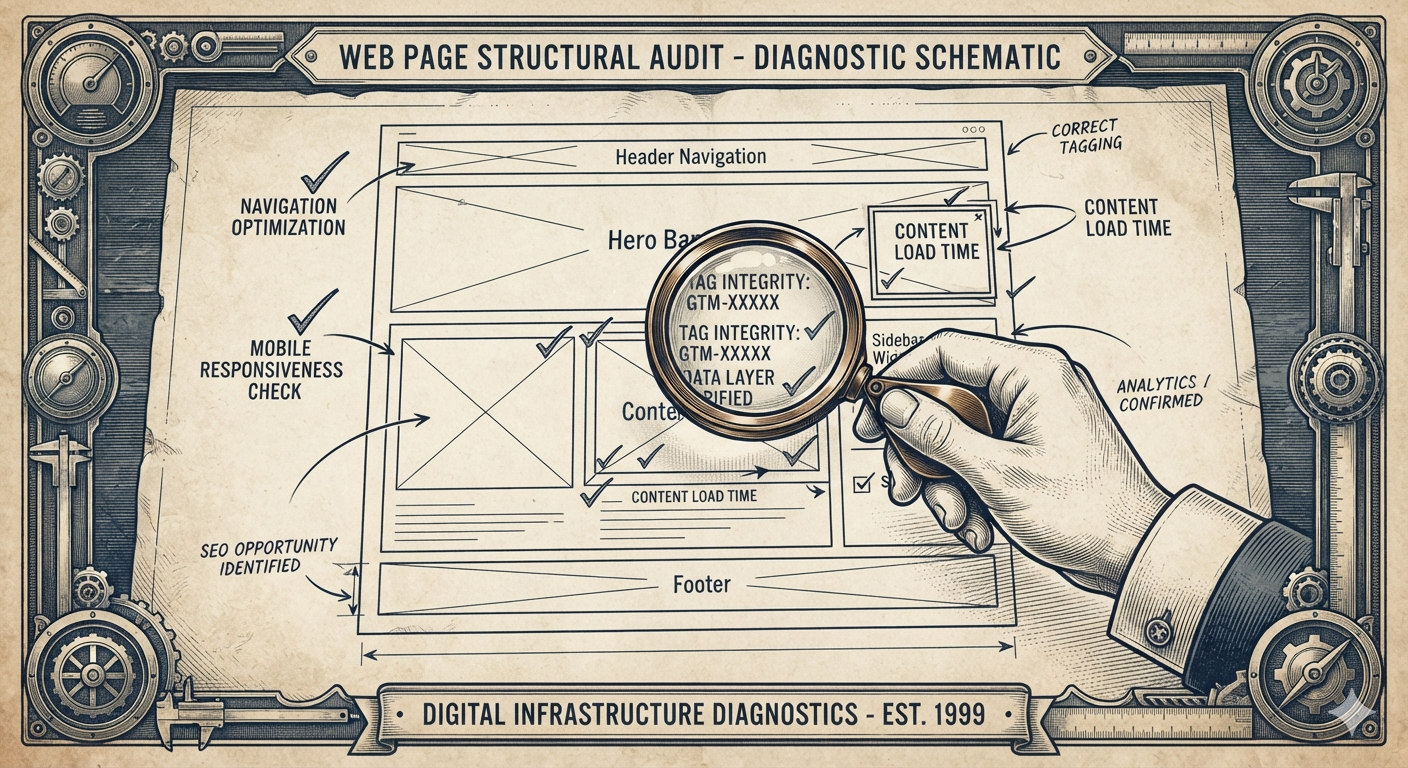
This is exactly what Steelbridge GTM can help with. Our website audit crawls every page of your site and runs 85+ checks - performance, layout, accessibility, broken images, console errors, and more - across desktop, tablet, and mobile, so maintaining and improving your website turns into a concrete list instead of a vague good intention.
None of this is a launch-week checklist you clear once and move on from. It's the actual job, on a loop, for as long as the site exists - focus, test, learn, iterate, repeat, adapt, evolve, grow. The build gets you a site. Strategy, content, traffic, conversion, community, measurement, revenue, and the systems that hold it all together are what turn it into something that actually does work for the business, instead of just sitting there looking finished.

Ready to Build Your GTM?
Whether you're launching from scratch or fixing what's broken, we'll help you get to revenue faster.