
What Is an Embedded Wallet, and Why It's Replacing Seed Phrases

Davor Altman
Founder, Steelbridge GTM · August 18, 2026 · 3 min read
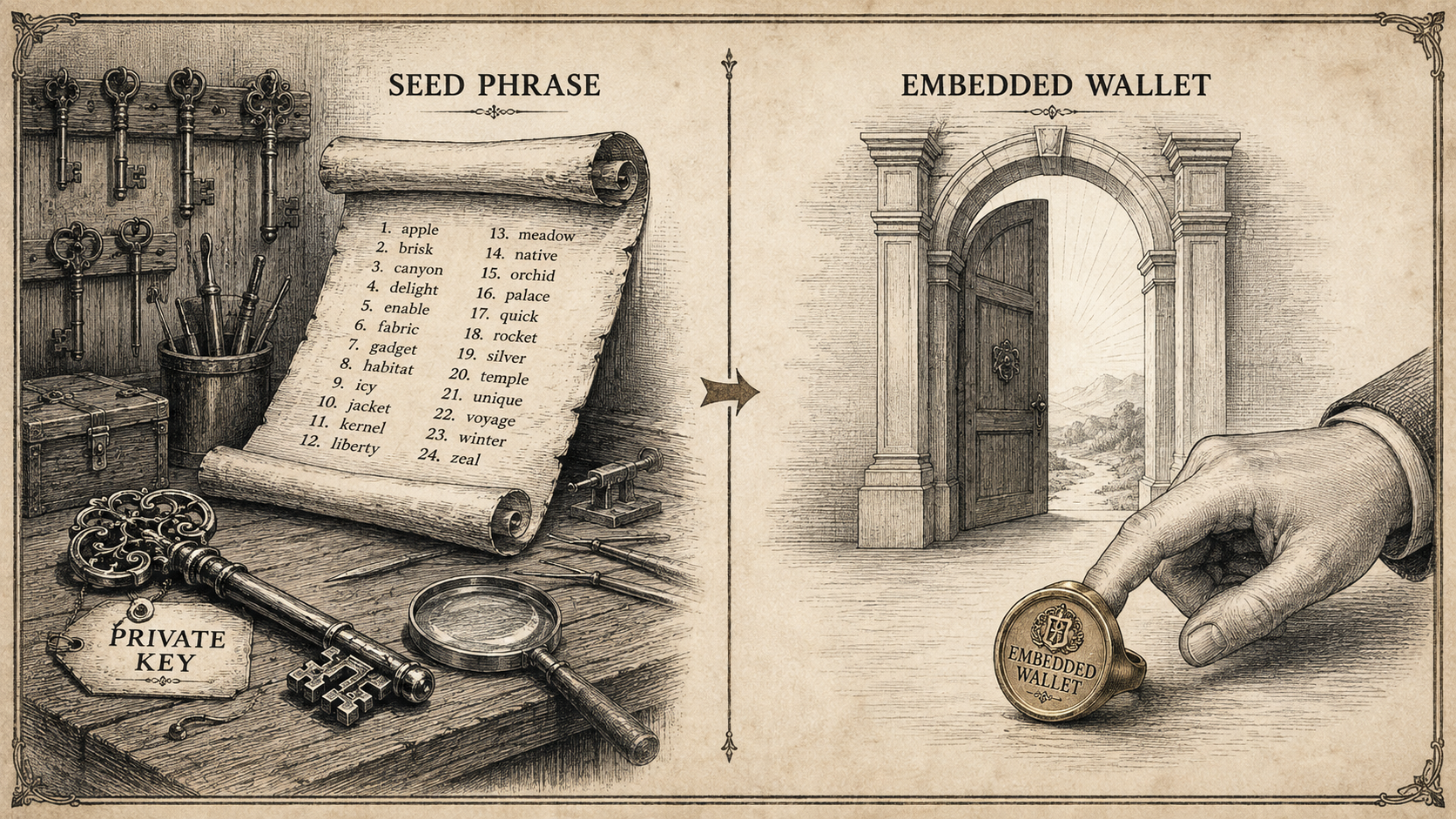
An embedded wallet is a crypto wallet built directly into an app, rather than a separate extension or app a user has to install first. Sign-up looks like any standard flow most of us are used to - email, Google, social login, or a passkey - and a wallet address is generated and ready behind the scenes. No separate download, no separate account to manage, no moment where a user has to understand blockchain before they can use the product.
That's a completely different story from how self-custody wallets were originally designed to work. A traditional wallet is secured by a private key: a piece of cryptographic data that proves ownership of the wallet and authorizes every transaction it signs. A seed phrase (also called a recovery phrase or mnemonic phrase) is a human-readable backup of that private key - typically 12 or 24 words - that can regenerate it if the device holding it is lost. The private key is the actual credential; the seed phrase is just a recoverable, memorable encoding of it. Lose both and there's no password reset, no support ticket, no recovery - all the funds you had in the wallet will be lost.
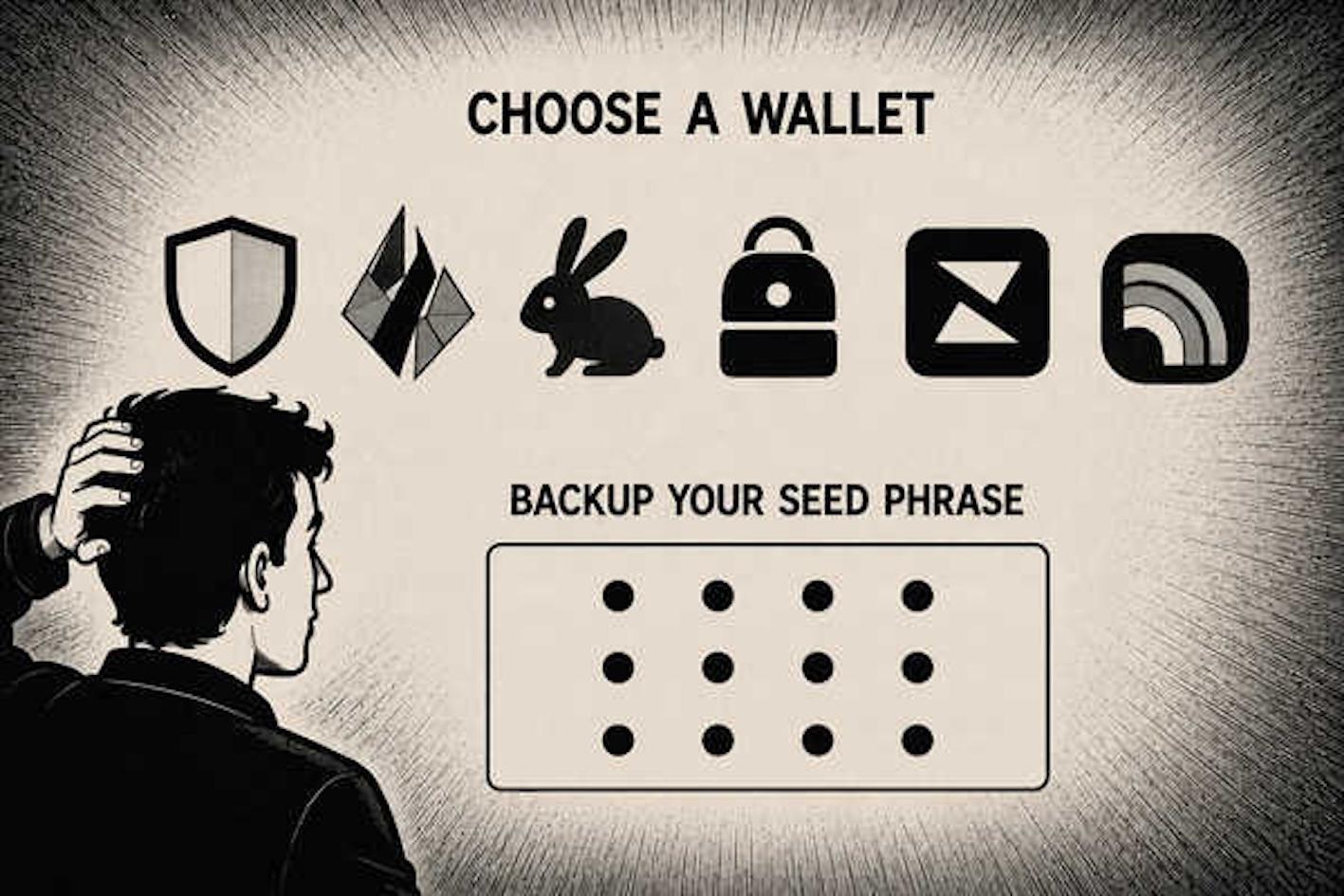
That's the wall I hit myself when I got into blockchain, and I'm not alone: I wrote about my experience in Blockchain Onboarding Complexity, where I mentioned that a 2025 study found fewer than half of crypto users (43.4%) could even recognize a seed phrase, and most conflate it with a resettable password. Wallet setup is consistently cited as the number 1 friction point for new users onboarding to DeFi - not a UX nuisance, a conceptual wall.
Embedded wallets don't eliminate the private key - it still exists, it's just no longer the user's problem on day one. It's generated and secured behind the login flow instead of handed to a user as 12 words they have to write down and protect themselves. That's why PancakeSwap, Velora, Uniswap, and Coinbase's DEX trading have all shipped it: it turns wallet creation from a moment of anxiety into a step the user barely notices.
However, custody becomes the trade-off then. A self-custody wallet secured by a seed phrase only the user holds is trustless by design - no app, exchange, or company can freeze or access those funds. Most embedded wallets rely on some form of key management infrastructure (MPC, secure enclaves, or a custodial backend) to remove that burden from the user, which means a degree of trust shifts back to the app or provider. For an onboarding flow, that trade-off is usually worth it. For a user who wants full self-custody and no dependency on any third party, a seed-phrase wallet might still be the more accurate answer.
If wallet setup is where your users are dropping off before they ever reach your product, that's the exact friction wallet infrastructure providers, like Openfort.io, are built to remove - feel free to get in touch and I'll provide advice and assistance.


Ready to Build Your GTM?
Whether you're launching from scratch or fixing what's broken, we'll help you get to revenue faster.